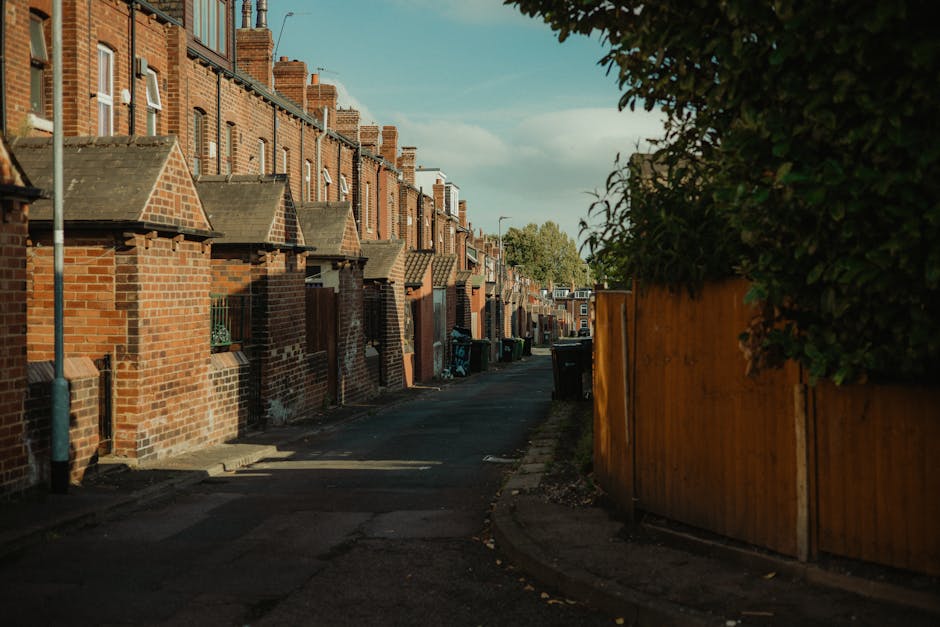
Stave Hill Estate Rubbish Clearance Guide for SE16 Homes
If you live near Stave Hill Estate in SE16, rubbish can build up faster than you expect. A spare sofa in the hallway, broken flat-pack furniture, a box of loft clutter that never quite got sorted, or a garden shed full of damp odds and ends - it all starts to feel heavy, visually and mentally. This Stave Hill estate rubbish clearance guide for SE16 homes is here to make the process simpler, safer, and a lot less stressful.
Whether you are clearing a flat, a maisonette, a family home, or a property that has seen years of accumulated belongings, the right approach can save time and avoid awkward mistakes. In practice, that means knowing what can be removed, how to prepare items, what to ask from a clearance team, and how to keep things compliant and tidy. Let's get into it properly.
Expert summary: The best rubbish clearance is not just about taking things away. It is about planning access, separating reusable items, handling waste responsibly, and choosing a service that understands the realities of SE16 living - stairs, parking, narrow corridors, and busy schedules.
Useful starting point: if you are comparing services, it can help to review pricing and quotes alongside the wider range of waste removal options available.
Table of Contents
- Why this matters for Stave Hill Estate homes
- How rubbish clearance works in practice
- Key benefits and practical advantages
- Who this is for and when it makes sense
- Step-by-step guidance
- Expert tips for better results
- Common mistakes to avoid
- Tools, resources and recommendations
- Law, compliance, standards and best practice
- Options and comparison table
- Case study example
- Practical checklist
- Conclusion
- Frequently asked questions
Why Stave Hill Estate Rubbish Clearance Guide for SE16 Homes Matters
Stave Hill Estate sits in a part of SE16 where homes are often practical, compact, and lived in hard. That is not a criticism - it is just real life. When you have limited storage, shared entrances, lift access to consider, and neighbours close by, waste becomes visible quickly. One overfilled bin area or a hallway stacked with unwanted items can make the whole home feel cramped.
Rubbish clearance matters here because small delays create bigger problems. A broken wardrobe left in a flat for a week can block access. Bags of mixed waste can attract smells or pests. Heavy items placed in common areas can become a safety issue. And if you are moving, renovating, or dealing with a bereavement, the emotional load is already enough without tripping over old furniture on the way to the kettle.
There is also the practical side. In many SE16 homes, people are balancing work, family life, and travel. The goal is not to spend a Saturday doing endless trips to a tip with a car full of awkward rubbish. The goal is to clear the space efficiently and leave it properly sorted. That is where a good clearance plan pays for itself.
Another reason this guide matters is trust. Not all waste is the same. Some items can be donated, some recycled, and some need careful handling. A thoughtful clearance approach reduces avoidable waste, which is better for the home and better for the local environment too. If sustainability matters to you, it is worth reviewing a provider's recycling and sustainability approach before booking.
How Stave Hill Estate Rubbish Clearance Guide for SE16 Homes Works
At a basic level, rubbish clearance means removing unwanted items from a property and transporting them for disposal, reuse, or recycling. Simple enough. The part that matters, though, is the way it is done. Good clearance is organised. It starts with identifying what needs to go, how much there is, and whether anything is reusable or requires special handling.
For SE16 homes, access is often the make-or-break factor. Can a van park close enough? Are there stairs? Is there lift access? Are there communal paths, courtyard rules, or time restrictions? These things sound minor until you are standing there with a mattress and a filing cabinet, trying to manoeuvre around a corner that was clearly designed by someone who hated furniture.
A typical clearance process usually looks like this:
- Assess the items that need removing.
- Separate rubbish, recycling, and reusable goods where possible.
- Check access, parking, and any property-specific requirements.
- Agree the collection scope before any work begins.
- Remove items safely and load them into the vehicle.
- Dispose of waste through the appropriate route.
- Leave the area tidy and check nothing has been missed.
For homes with bulkier items, you may need a more focused service such as house clearance, flat clearance, or even furniture clearance if the main issue is large household pieces.
Sometimes the scope is broader than expected. What starts as "just a few bags" turns into a garage, loft, and spare room situation. It happens more often than people admit. In that case, a fuller home clearance may be the cleaner solution.
Key Benefits and Practical Advantages
The obvious benefit is space. Once the clutter goes, rooms feel bigger, lighter, and much easier to use. But there is more to it than that. A proper clearance can reduce trip hazards, improve hygiene, and make decorating or moving far easier. You can actually see the floor. That's a nice moment, to be fair.
- Faster turnaround: A professional team can clear in one visit what might take you several weekends.
- Less physical strain: No lifting awkward items down stairs or into a borrowed car.
- Cleaner finish: A thorough service leaves the space ready for cleaning, sale, or re-use.
- Better sorting: Reusable items can be separated from general waste more efficiently.
- Lower stress: You do not have to keep revisiting the same pile of stuff and wondering where to start.
For properties with mixed contents, specialist services can be useful. A room of old wardrobes and bed frames may suit furniture disposal. A cluttered roof space may be better handled through loft clearance. A neglected outside area could be tackled with garden clearance.
There is a confidence benefit too. Once the rubbish is gone, you stop making mental notes about it. No more "I'll deal with that next week" hanging over you every time you walk past the pile. That relief is real.
Who This Is For and When It Makes Sense
This guide is useful for a wide range of SE16 residents, but especially for people living in and around Stave Hill Estate who need a practical plan rather than a theoretical one.
You may need rubbish clearance if you are:
- moving out or moving in
- clearing a rental property between tenancies
- dealing with inherited belongings
- refreshing a flat after years of accumulation
- making room for a child's bedroom, home office, or guest space
- sorting after builders have left leftover materials
- removing old furniture, white goods, or mixed household waste
It also makes sense if your rubbish is not "rubbish" in the everyday sense, but more like a collection of items that have no home anymore. The box of cables. The half-used shelving. The broken exercise bike that nobody has ridden since winter. You know the sort.
For business owners or landlords with mixed needs, business waste removal may be a better fit for commercial material, while domestic homes will often benefit more from house clearance or waste removal.
Step-by-Step Guidance
If you want the process to run smoothly, the best approach is to treat it like a small project. Nothing dramatic. Just a little structure goes a long way.
1. Walk through the property slowly
Start room by room. Open cupboards. Check under beds. Look in sheds, corners, and behind sofas. People often underestimate where things have accumulated. A five-minute sweep can reveal enough to fill a van. Possibly two.
2. Separate items into sensible groups
Make three groups: keep, donate/reuse, and remove. If you are undecided, put the item aside and revisit it later. Do not waste time arguing with a dusty lamp you have not used for four years.
3. Identify awkward or sensitive waste
Bulky furniture, electrical items, paint, plasterboard, sharp objects, and heavy bags all need a slightly more careful approach. If builders have been involved, look at builders waste clearance for heavier renovation debris.
4. Check access and timing
Measure doorways if needed. Think about stairs, lifts, parking, and whether neighbours or concierge staff need notice. In busy blocks, a poor access plan can slow everything down. Sometimes by a lot.
5. Book the right level of service
Do not overbook or underbook. If the job is only a sofa and a few bags, a lighter service may be enough. If the home is full from loft to hallway, a broader clearance is more sensible. Matching the service to the load matters.
6. Prepare the property
Move anything you definitely want to keep to one side. Clear paths where possible. Put keys, fobs, and access instructions somewhere obvious. Small detail, huge difference.
7. Confirm what happens after collection
Ask how items will be handled. Ideally, reusable goods are separated where possible and the rest is disposed of responsibly. That is standard good practice, not a luxury extra.
8. Do a final check
Once the clearance is complete, walk through the space again. Check cupboards, under tables, and behind doors. It is amazing how often one tiny item gets left behind. Usually the thing you needed least, but still.
Expert Tips for Better Results
A few simple habits make clearance work far better, especially in apartment-style or estate settings.
- Take photos before booking: This helps you and the clearance team understand scale and access.
- Be honest about volume: Understating the amount of waste usually causes delays or revised expectations.
- Keep a separate "maybe" pile: Anything you are unsure about should be kept out of the main clearance area until you decide.
- Ask about dismantling: Beds, wardrobes, and shelving often need to be broken down before removal.
- Use one contact person: If several people are involved, make one person responsible for decisions. It avoids the usual "I thought you were keeping that" moment.
One useful tip for SE16 homes: time the clearance around building noise, parking pressure, and the school run if your street gets busy. Early morning or mid-morning often works better than late afternoon, though each property is different.
If you are arranging a one-off job and want to keep the transaction straightforward, it is also sensible to review payment and security and the company's insurance and safety information before confirming anything.
Practical takeaway: The more clearly you define the clearance before the team arrives, the smoother it goes. A tidy plan usually means a tidy finish.
Common Mistakes to Avoid
Most clearance problems are preventable. Honestly, that is the annoying part. People only discover the issues after the van is already on site.
- Leaving sorting until collection day: This slows everything down and makes it harder to keep useful items aside.
- Forgetting access details: No parking space, no fob, no lift booking - these details matter more than people think.
- Mixing everything together: A jumble of waste, electronics, and reusable furniture is harder to process responsibly.
- Ignoring building rules: Some estates have quiet hours or loading restrictions. Better to check first.
- Assuming all items can go the same way: That is not how responsible waste handling works.
- Booking too late: If a move, sale, or refurbishment deadline is close, leaving clearance to the final 24 hours is asking for stress.
One more thing. People sometimes think a clearance has to be dramatic to matter. It doesn't. Even a modest declutter can transform a flat. A few bags, a broken chair, and one overstuffed cupboard can make a place feel oddly trapped. Clear those, and suddenly the room breathes again.
Tools, Resources and Recommendations
You do not need a van full of equipment to get organised, but a few simple tools can help.
- Marker pens and labels: Useful for identifying keep, remove, donate, and recycle piles.
- Strong bin bags or rubble sacks: Better for sorting loose waste safely.
- Gloves: Helpful for lofts, garages, and dusty corners.
- Basic tape measure: Handy if bulky furniture must pass through narrow spaces.
- Phone camera: Quick before-and-after records are useful for planning and peace of mind.
For bigger domestic projects, you may want to look at house clearance or home clearance. If the problem is more specific - say an overfilled garage or a loft that has not been touched since the last decade - the more targeted service is usually the better fit.
If you are comparing waste handling options, the most useful question is not "what is cheapest?" but "what gives me the cleanest result with the least hassle?" That answer changes depending on the property, the items, and how fast you need it done. A little common sense goes a long way here.
Law, Compliance, Standards and Best Practice
This part matters even for ordinary household clearances. In the UK, waste should be handled responsibly, and anyone removing it should be able to do so in a way that aligns with accepted waste management practice. You do not need to become a legal expert, but you should expect sensible handling, clear communication, and appropriate disposal routes.
For householders, the most practical advice is simple:
- use a service that is clear about what it takes away
- avoid handing waste to anyone who cannot explain where it goes
- separate items that may need special handling
- do not leave rubbish in communal areas longer than necessary
If your clearance includes electricals, sharp materials, or heavy construction residue, caution matters even more. There can also be insurance and access considerations in estate buildings, especially when shared spaces are involved. That is why it is worth checking a provider's health and safety policy alongside their general service information.
Best practice is not complicated. It usually means:
- safe lifting and carrying
- respect for communal spaces
- tidy loading and removal
- clear handling of reusable and recyclable goods
- transparent service terms
If the job involves a business unit, an office, or mixed domestic-commercial waste, then the scope may shift toward office clearance or business-specific waste handling. Domestic and commercial waste are not the same thing, and it is better to be precise than casual about it.
Options, Methods, or Comparison Table
There is more than one way to clear rubbish from a Stave Hill Estate home. The right option depends on volume, item type, access, and how quickly you need the space back.
| Option | Best for | Pros | Watch out for |
|---|---|---|---|
| DIY clearance | Very small loads, light items, flexible schedule | Low direct cost, full control | Time-consuming, heavy lifting, multiple trips, disposal logistics |
| Targeted furniture removal | Sofas, beds, wardrobes, mixed bulky pieces | Efficient for large items, less strain | Can miss other clutter if the home needs broader clearing |
| Full home or house clearance | Whole-property decluttering, moves, bereavement, tenant changeovers | Comprehensive, neat finish, saves time | Needs clear scope and good access planning |
| Waste removal service | Mixed household rubbish, bags, general unwanted items | Flexible, practical, simple booking | Best results depend on clear item descriptions |
For many SE16 homes, the middle ground is best. A targeted service can solve a real problem without overcomplicating things. But if the clutter has spread into several rooms, the broader approach often ends up being better value. Less fuss, fewer compromises.
Case Study or Real-World Example
Here is a realistic example from the kind of job that comes up often in estate living.
A couple in a Stave Hill Estate flat had recently finished a room refresh. What started as a simple request to remove an old sofa turned into a much bigger job: a broken ottoman bed, three bags of mixed clutter, a set of tired dining chairs, a small cupboard from the hallway, and a box of long-forgotten cables. Nothing dramatic. Just the sort of collection that quietly takes over a home.
The important part was planning access. The team checked the lift, confirmed parking, and asked the residents to keep the main walkway clear. Items were grouped in advance so the work could move quickly. The sofa and bed were removed first, then the smaller items were loaded in one sweep. The whole place looked oddly brighter afterwards, especially in the morning light coming through the windows.
The couple later said the main relief was not just the empty space, but the fact that they no longer had to keep thinking about it. That is the hidden value of clearance. It gives you headroom again. A bit of breathing space. And frankly, that is worth a lot in a busy home.
Practical Checklist
Use this checklist before booking or starting your Stave Hill Estate rubbish clearance.
- Walk through every room and note what needs to go
- Separate keep, donate/reuse, and remove items
- Check for awkward waste such as electricals or sharp objects
- Measure large furniture if tight access is likely
- Confirm parking, lift access, and any estate restrictions
- Decide whether you need a targeted or full-property clearance
- Take photos for reference
- Make sure valuables and documents are safely removed first
- Prepare keys, fobs, and access instructions
- Review service details, insurance, and payment expectations
- Ask how items will be sorted and disposed of
- Do one final sweep after the clearance is complete
That last sweep is worth it. You will almost always find one small thing tucked behind something bigger. Usually the thing you would have needed tomorrow. Annoying, yes. Preventable, also yes.
Conclusion
A sensible Stave Hill estate rubbish clearance guide for SE16 homes is really about making life easier. Not more complicated. When you plan the job properly, match the service to the amount of waste, and pay attention to access and safety, the whole process becomes far smoother than people expect.
The best results usually come from clear preparation, honest communication, and choosing the right kind of clearance for the property. Whether you are dealing with a single bulky item or a whole flat that needs resetting, a calm method always wins. No drama, just a clean result.
If you are ready to move forward, compare the practical options, check the details that matter, and take the next step with confidence. A tidier home really does change how a day feels - even on a grey London morning.
Get a free quote today and see how much you can save.
Frequently Asked Questions
What is the best way to clear rubbish from a Stave Hill Estate home?
The best way is to sort items first, separate anything reusable, and choose a clearance method that matches the volume and access. For many homes, a professional waste removal service is the least stressful option.
Can I clear bulky furniture from a SE16 flat without damaging the property?
Yes, but it needs careful handling. Measure doorways, protect communal areas where possible, and make sure large items are dismantled if needed. Sofas, wardrobes, and beds are the usual troublemakers.
How do I know if I need house clearance or flat clearance?
If the job involves one room or several bulky items, flat clearance may be enough. If the whole property needs emptying or reorganising, house clearance is usually the better fit.
What happens to the items after collection?
That depends on the item type and service provider process. Good practice is to separate reusable goods, recyclable materials, and general waste, with disposal handled responsibly.
Is rubbish clearance suitable for landlords and tenants?
Yes. It is common after a tenancy ends, before a new occupant moves in, or when a property needs a reset. It helps restore the space quickly and avoids last-minute stress.
Can clearance include garden or loft clutter?
Absolutely. Garden tools, green waste, old pots, and outdoor furniture can often be handled through garden clearance, while stored boxes and forgotten items suit loft clearance.
Do I need to sort everything before the team arrives?
You do not need to sort perfectly, but a basic split between keep, remove, and unsure items helps a lot. The clearer the job brief, the smoother the result.
What if I only have a few bags of waste?
Then a lighter waste removal job may be all you need. There is no point overcomplicating a small clearance if the contents are straightforward.
Are there safety issues with rubbish clearance in estate buildings?
There can be. Shared entrances, stairs, lifts, and parking areas need care. That is why safe lifting, good communication, and proper insurance are all worth checking.
How far in advance should I book rubbish clearance?
If you have a moving date, renovation deadline, or tenancy handover, book as early as you can. Even a short delay can become annoying once the space is already packed.
Can clearance help with renovation waste?
Yes. Leftover packaging, offcuts, old fixtures, and similar debris may be handled through builders waste clearance, depending on the exact material and amount.
What should I ask before confirming a clearance booking?
Ask what is included, how access will work, whether the provider is insured, how waste is handled, and what payment terms apply. A few clear questions now save trouble later.
Is recycling part of rubbish clearance?
It should be, wherever practical. Responsible clearance services aim to separate recyclable materials and reduce avoidable landfill use. That is one of the clearest signs of a well-run service.
Where can I learn more about the company before booking?
You can review the company background through the about us page and check practical service details before making a decision.