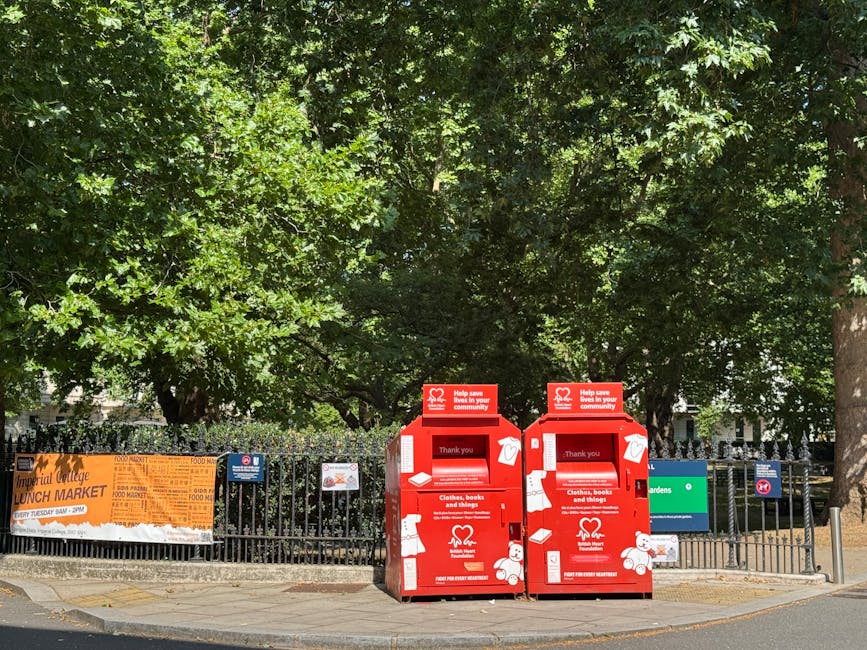
Top rubbish drop-off points near Brunel Museum, Rotherhithe
If you're trying to clear a few awkward bags, a broken chair, old boxes, or a mini mountain of renovation leftovers, the search for Top rubbish drop-off points near Brunel Museum, Rotherhithe can save time, stress, and a couple of unnecessary laps around the neighbourhood. The key is knowing what kind of waste you have, where it can legally go, and whether a quick drop-off is the smartest move or whether a booked clearance is cleaner and simpler.
Near the Brunel Museum, you're dealing with a busy part of South East London where access, parking, and timing matter. That means the "best" option is not always the closest one. Sometimes it's the site with easier loading, sometimes it's the service that accepts the exact waste you've got, and sometimes it's just the one that lets you get on with your day without faffing about. This guide breaks it all down plainly.
You'll find practical ways to compare rubbish drop-off options, what to check before you leave home, the common mistakes people make, and when it makes more sense to book a professional collection instead. We'll also link to useful local services if your waste is too bulky, mixed, or heavy for a simple tip run.
Table of Contents
- Why top rubbish drop-off points near Brunel Museum, Rotherhithe matters
- How rubbish drop-off near Brunel Museum works
- Key benefits and practical advantages
- Who this is for and when it makes sense
- Step-by-step guidance
- Expert tips for better results
- Common mistakes to avoid
- Tools, resources and recommendations
- Law, compliance, standards and best practice
- Options, methods, and comparison table
- Case study or real-world example
- Practical checklist
- Conclusion
- Frequently asked questions
Why Top rubbish drop-off points near Brunel Museum, Rotherhithe Matters
Rubbish disposal sounds simple until you're standing in front of a pile of mixed waste and realising half of it can't just go in the nearest general bin. That's especially true in an area like Rotherhithe, where space is tight, streets are active, and you may not have the luxury of loading everything into a van at your own pace. A good drop-off point gives you a lawful, practical way to clear waste without letting it sit in a hallway, on a balcony, or in a garage for another week.
For many people near Brunel Museum, the real issue is not "Where can I throw this away?" but "Where can I take it quickly, safely, and without making things worse?" That could be a household recycling site, a specialist waste facility, or in some cases a booked waste removal service that handles collection for you. The right choice depends on volume, material type, and how much lifting you want to do yourself. To be fair, that last part matters more than people admit.
Good rubbish drop-off matters because it helps with:
- keeping homes, flats, and shared buildings clear and usable
- avoiding fly-tipping risk and careless disposal
- reducing clutter before a move, renovation, or tenancy check-out
- separating recyclable materials from general refuse
- saving money when the waste is suitable for self-delivery rather than collection
It also supports the wider local environment. Nobody wants bags left by a wall, a pile of old paint tins in a communal entrance, or broken furniture leaning against a fence for three days. Not a great look, and definitely not ideal for neighbours.
If you're weighing up a fuller clearance rather than a simple drop-off run, it can help to look at a broader waste removal service in Rotherhithe or more targeted options like house clearance and flat clearance when there's a lot more than a few bags involved.
How Top rubbish drop-off points near Brunel Museum, Rotherhithe Works
Most rubbish drop-off points work on a simple principle: you separate the waste, transport it yourself, present it in the right container or at the right facility, and pay any applicable charge if the site does not accept it free of charge. But the practical steps vary a lot depending on the type of waste.
For example, a small amount of clean cardboard is not the same as old paint, a mattress, soil, or demolition rubble. One may be straightforward, another may need a specialist stream, and some items may require pre-booking or proof that the material is allowed. That's why checking before you leave is a huge time-saver.
In the Brunel Museum area, people often look for a balance of proximity and practicality. A point that is technically nearby but awkward to access can end up taking longer than one that is a little further away but easier to use. If you're carrying items on foot or using public transport, the calculation changes again. Suddenly, bin size, opening hours, and walking route matter quite a lot.
Typical drop-off flow:
- Sort waste into general, recyclable, reusable, and specialist items.
- Check what the chosen site accepts and whether booking is needed.
- Pack the waste securely so nothing leaks, spills, or breaks in transit.
- Load carefully and take the most direct route possible.
- Unload into the correct area, following site staff instructions.
- Keep any receipt or confirmation if you need proof of lawful disposal.
If the load includes furniture, office items, or mixed junk from a home or business, it may be easier to compare self-drop-off with collection-based services such as furniture disposal, office clearance, or business waste removal. Sometimes the best drop-off point is the one you never have to visit because a proper collection saves the headache.
Key Benefits and Practical Advantages
The biggest advantage of a good rubbish drop-off option is control. You decide when the waste leaves your property, what you take, and how it's sorted. That can be a relief if you're working around shift hours, family commitments, or a narrow move-out deadline.
Another benefit is clarity. When you self-deliver, you usually see exactly where the waste goes, which is reassuring if you care about recycling and responsible disposal. You're not wondering whether it vanished into a random skip; you're doing the job properly, or at least making a decent run at it.
Here are the main practical advantages:
- Better timing: drop waste when it suits your schedule.
- Lower complexity: useful for smaller, well-sorted loads.
- More certainty: you know what you've taken and where it went.
- Reduced clutter: especially helpful in flats and shared spaces.
- Environmental value: recycling streams can be used more effectively when waste is sorted.
There's also a psychological benefit. Once the junk is gone, the room feels bigger. The light changes. The place sounds different, too - less echo, fewer odd rattles from stacked boxes. It sounds a bit sentimental, maybe, but people notice it immediately.
For larger or mixed items, self-drop-off can become less attractive once you factor in time, van hire, parking, loading, and the chance of turning up with the wrong material. If that sounds familiar, services like furniture clearance, garage clearance, or loft clearance may be the more efficient route.
Who This Is For and When It Makes Sense
Rubbish drop-off points are not just for major clear-outs. They're useful for ordinary people dealing with ordinary mess, which is most of life, really. If you live near Brunel Museum, you may need them after a small declutter, a tenancy change, DIY work, or a garden refresh.
This is especially relevant if you are:
- a tenant clearing a flat before checkout
- a homeowner dealing with bulky household rubbish
- a landlord preparing a property between occupiers
- a small business owner disposing of non-hazardous office waste
- a tradesperson with leftover building or renovation material
- someone clearing a garage, loft, or storage area that has quietly become a black hole
It makes sense when the waste is manageable in size, fairly well sorted, and legal to transport yourself. If you have a few bags, small furnishings, cardboard, and general clutter, a drop-off point can be ideal. If you've got wet plaster, heavy rubble, chipped cabinets, and a broken wardrobe all mixed together, the "quick trip" can become a very long afternoon.
For home and tenancy situations, the right support often comes from home clearance or house clearance. If it's mainly a single room or a smaller property, flat clearance is usually a better fit.
And if the waste is business-related, keep it separate from domestic rubbish. Mixing streams can make the process messier and less predictable. A proper office clearance or business waste removal arrangement will usually be the cleaner option.
Step-by-Step Guidance
If you want the process to go smoothly, a little planning helps a lot. Nothing dramatic. Just enough to avoid that classic moment where you arrive with two black sacks, a broken desk chair, and the site won't take half of it. Frustrating, and not uncommon.
1. Identify the waste type first
Start by separating what you have into broad categories: general rubbish, recycling, reusable items, bulky furniture, garden waste, building waste, and anything that may need specialist handling. This step alone prevents most wasted journeys.
2. Check the site rules before leaving
Look up opening hours, access requirements, accepted materials, and any booking or ID rules. Some sites may limit certain vehicle sizes or require pre-booked slots. Don't assume every drop-off point works the same way.
3. Pack the load safely
Use sturdy bags, lids, tape, and covers where needed. Secure sharp items and prevent loose dust or debris from escaping. If you're carrying furniture, dismantle what you can. Less drama in the stairwell, less chance of scraping a wall.
4. Plan your route and timing
In an area like Rotherhithe, traffic and parking can be the hidden headache. Try to avoid the busiest times if you can. A calm early-morning run can be much easier than fighting through mid-day congestion.
5. Keep proof of proper disposal
If you're disposing of anything sensitive, commercial, or bulky, keep a record of where it went. That's a sensible habit for households and businesses alike.
6. Reassess after unloading
Once the waste is gone, look at what remains. A second smaller load may be possible, or you may realise the rest is better handled by a service. This is where many people make a smarter decision on the fly.
If you're not sure whether your load is worth driving somewhere yourself, compare it with pricing and quotes for collection-based support. Sometimes the added convenience is worth more than the petrol and lifting effort.
Expert Tips for Better Results
After enough clearances, one thing becomes obvious: the people who do well are usually not the people with the biggest van. They're the people who sort properly, measure honestly, and avoid the "it'll probably fit" mentality. It rarely does, by the way.
Here are a few practical tips that really do help:
- Separate fragile items early. Broken glass, ceramics, and electronics should not rattle around with heavier waste.
- Flatten what you can. Cardboard, packaging, and some furniture components become much easier to transport when compressed.
- Don't mix hazardous materials. Paint, chemicals, batteries, and similar items often need special handling.
- Use clear bags for sorting. It saves time when unloading and makes checking easier.
- Leave a buffer in the car or van. Stuff always takes more room than people think.
A practical local tip: if you're moving waste from a flat or property with tight access, take stock of stair width, lift size, and turn angles before you start. That one decision can prevent a lot of grumbling and a bruised shin or two. Been there, done that.
For bigger or more awkward items, a structured clearance service can be the wiser "expert" move. If your pile includes old wardrobes, sofas, tables, or mattresses, look at furniture clearance and furniture disposal. If the mess has spread into the shed or outside area, garden clearance may save you a good chunk of time.
Common Mistakes to Avoid
Most bad rubbish runs happen for boring reasons. People misjudge the waste, arrive unprepared, or assume a site will take "anything that fits in the boot." That assumption causes more trouble than it should.
Watch out for these common mistakes:
- Not checking the accepted waste list. Different facilities handle different materials.
- Bringing mixed waste unsorted. This slows everything down and can lead to refusal.
- Forgetting to protect the vehicle. Mud, leaks, or loose debris can create extra hassle.
- Ignoring access and parking. A "nearby" site can still be awkward if loading is difficult.
- Trying to move too much in one trip. That usually ends in frustration, not efficiency.
- Assuming bulky items are accepted for free. Sometimes they aren't.
There's also the hidden mistake of not thinking about the final destination. If you're clearing an office, for example, an office waste stream is not the same as domestic rubbish. The same goes for builders' leftovers. In those cases, services like builders waste clearance can be a much more suitable fit than a standard self-drop-off run.
Truth be told, the biggest mistake is usually trying to save twenty minutes and spending two hours instead.
Tools, Resources and Recommendations
You do not need much to make a rubbish drop-off work well, but the right kit makes the whole thing smoother. Think of this as the practical box under the sink or in the boot - nothing glamorous, just useful.
| Tool or resource | Why it helps | Best for |
|---|---|---|
| Strong rubble sacks or refuse bags | Prevents splitting and makes lifting safer | General junk, light building waste, garden waste |
| Ratchet straps or bungee cords | Keeps items stable in transit | Furniture, boxes, mixed loads |
| Dust sheets or tarpaulin | Protects car boot or van interior | Dirty, dusty, or damp material |
| Labels or marker pen | Makes sorting quicker on arrival | Mixed loads with different disposal streams |
| Booking confirmation or route notes | Reduces delays and confusion | Planned site visits and timed slots |
When self-drop-off becomes too awkward, use the support pages on the site to compare alternatives. The team behind about us gives a sense of the service approach, while recycling and sustainability is useful if your main concern is responsible disposal rather than pure convenience.
If you're arranging a move, project, or seasonal declutter, it can also help to check contact options and quote information before making a final decision. A quick conversation can be more useful than ten browser tabs, let's face it.
Law, Compliance, Standards, or Best Practice
Waste disposal in the UK carries responsibilities, even when you're dealing with ordinary household rubbish. The exact rules depend on the material, but the general principle is simple: dispose of waste through legitimate channels and avoid passing it to anyone who may not handle it properly.
For residents and small businesses near Brunel Museum, best practice usually means:
- using authorised disposal routes
- keeping hazardous items separate from ordinary refuse
- checking that a provider is transparent about handling and transport
- retaining records for commercial waste where appropriate
- avoiding fly-tipping at all costs, even if the load is inconvenient
If you are clearing commercial premises or mixed office material, it is especially sensible to keep an audit trail. That does not need to be complicated, just sensible and consistent. If you want reassurance around service standards, insurance, and operational care, read the relevant insurance and safety information and the health and safety policy.
Where privacy or handling of documents matters, office waste should be dealt with carefully too. If your load includes paperwork, electronics, or archive boxes, a dedicated office clearance route is usually better than guessing your way through a general rubbish drop-off. That's just common sense.
Options, Methods, or Comparison Table
There is more than one way to clear rubbish near Brunel Museum. Which one makes sense depends on the type of waste, the amount, and how much lifting or sorting you want to do yourself.
| Method | Best for | Pros | Trade-offs |
|---|---|---|---|
| Self-drop-off at a waste site | Small to moderate well-sorted loads | Direct, controlled, often efficient | Requires transport, lifting, and correct sorting |
| Bulky waste collection | Furniture, awkward items, mixed household waste | Minimal effort, no travel, good for access issues | Usually costs more than DIY drop-off |
| Specialist clearance service | Homes, flats, offices, gardens, garages, lofts | Tailored, efficient, helpful for complex loads | Less hands-on control over the disposal day |
| DIY reuse/sell/donate | Usable furniture or equipment | Reduces waste and can help others | Takes time and item condition must be good |
If you are dealing with a straightforward few bags, self-drop-off can be the cheapest and neatest option. If the waste is scattered across rooms, the items are heavy, or you need it gone quickly, collection often wins on practicality. For many people, the real answer sits somewhere in the middle.
Case Study or Real-World Example
Here's a realistic example. A couple living near Brunel Museum decide to clear out a spare room before converting it into a home office. They've got old shelving, a broken desk chair, several bags of mixed clutter, cardboard boxes, and a small pile of bits from a DIY attempt that never quite got finished. Classic.
At first, they plan to do everything themselves. After sorting the easy recycling, they realise the chair is awkward, the shelving won't fit in their car without dismantling, and the bags are heavier than they looked at first glance. One person is free on Saturday morning, the other isn't. The trip starts to look less like a quick errand and more like a logistical hobby.
So they split the job. Light recycling goes to the appropriate drop-off stream. The bigger items are arranged through a home clearance style service, and the rest is grouped into a sensible removal plan. The room is cleared in one weekend instead of dragging on for three weeks. More importantly, they avoid overloading the car and making multiple unnecessary journeys.
Practical takeaway: the best rubbish drop-off point is often the one that matches your waste type, your schedule, and your lifting capacity - not just the nearest pin on a map.
That kind of judgement call is where experience really helps. A little planning changes the whole job.
Practical Checklist
Use this simple checklist before you head out.
- Sorted waste into sensible categories
- Checked opening hours and access arrangements
- Confirmed the site accepts the waste type
- Separated any hazardous or specialist items
- Packed everything securely in bags, boxes, or covers
- Measured bulky items against vehicle space
- Planned parking and unloading
- Kept any necessary paperwork or booking details
- Considered whether collection would be easier for the larger items
- Reviewed recycling options for reusable materials
If you can tick most of those boxes, you're in good shape. If not, pause for a moment and rethink the method. There's no prize for making the hardest possible version of the job.
Conclusion
The best rubbish drop-off approach near Brunel Museum, Rotherhithe is the one that fits your waste, your time, and your access reality. For small, sorted loads, self-drop-off can be efficient and perfectly sensible. For larger, mixed, or awkward waste, a professional clearance option often saves more stress than it costs.
In a part of London where space is precious and schedules are usually packed, good disposal planning is not a luxury. It's part of keeping a home, flat, office, or project running smoothly. Start with the type of waste, check your options carefully, and choose the route that leaves you with one less thing hanging around. Nice and simple, ideally.
Get a free quote today and see how much you can save.
And if you're still deciding, that's fine too. A careful choice now usually makes the whole week feel lighter.
Frequently Asked Questions
What is the best rubbish drop-off option near Brunel Museum, Rotherhithe?
The best option depends on the type and amount of waste. Small, sorted loads suit self-drop-off, while bulky or mixed waste is often better handled through a collection service.
Can I take furniture to a local rubbish drop-off point?
Sometimes, yes, but acceptance depends on the site and the item type. Large furniture often takes more effort to transport, so a dedicated furniture disposal or clearance service may be easier.
Do I need to book rubbish drop-off in advance?
Some facilities require booking or timed slots, while others operate more flexibly. Always check the site rules before you travel so you do not arrive to a closed gate or a full calendar.
Is it cheaper to drop rubbish off myself or book a collection?
Self-drop-off is often cheaper for small loads because you avoid labour and collection fees. But once you factor in transport, time, and lifting, a quote for collection can sometimes work out better than expected.
What should I do with mixed household rubbish?
Separate what you can before leaving. Mixed loads are more awkward to process and may not be accepted everywhere. If the pile is substantial, a house clearance service may be the cleaner solution.
Can I drop off building waste near Brunel Museum?
Possibly, but building waste has stricter handling expectations. Rubble, plaster, timber, and similar materials are often better handled through builders waste clearance or a suitable waste facility that accepts construction debris.
What if I only have a few bags of rubbish?
A few bags are usually ideal for self-drop-off if the material is accepted by the site. Just make sure the bags are strong, sealed, and sorted properly.
Can businesses use the same drop-off points as households?
Not always. Business waste may need separate handling and records. If you're disposing of commercial rubbish, look at business waste removal or office-focused support instead of assuming domestic rules apply.
What items are usually rejected at rubbish drop-off sites?
Commonly rejected items include hazardous waste, chemicals, certain electronics, and materials that need specialist processing. Rules vary, so check each site's accepted list carefully.
Is it worth using a service for a flat clear-out?
If you live in a flat, especially with stairs or limited parking, yes, it often is. A flat clearance service can remove a lot of effort from the process.
How do I know if my waste was disposed of properly?
Use a reputable provider, keep any receipts or written confirmation, and review their public information about disposal and safety. The site's recycling and sustainability and insurance and safety pages can help build confidence.
What's the simplest next step if I'm still unsure?
Sort the waste, estimate how much you have, and ask for a quote or guidance before loading the car. A short check now can save a wasted trip later, which honestly is the nice way to do it.